Ancient Origins to the Automobile Age
The concept of protected storage for vehicles dates back to ancient times. As early as 450 BC, chariots were stored in specialized gatehouses, representing humanity's first attempts at vehicle protection.
Before cars were invented, most homes had an outbuilding for housing the horse-drawn carriage. These carriage houses were often simple structures with dirt floors, four walls, and a swinging set of doors that were prone to falling off their hinges. Sometimes the carriage was simply stored in a barn along with the horses. Either way, things were kind of messy.
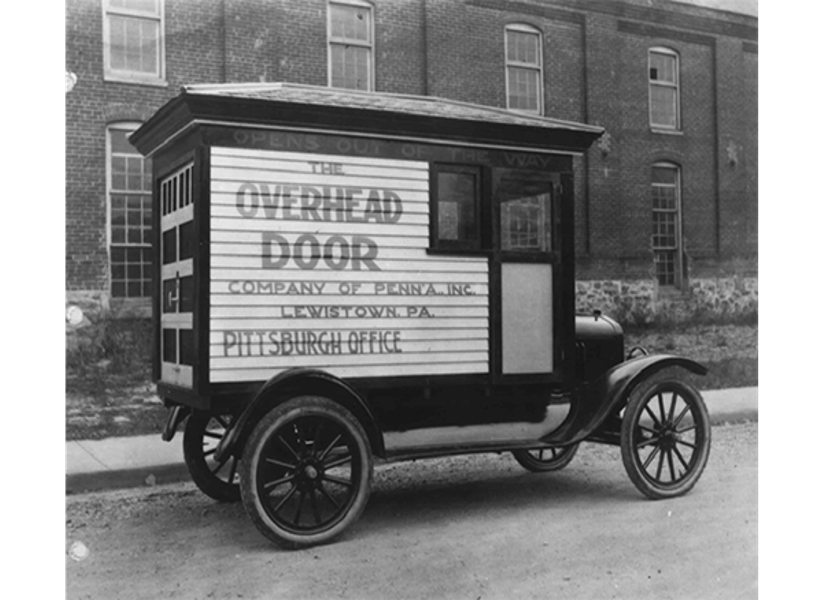
When cars came along, it did not take long for people to start looking around for someplace to store the vehicle out of the weather. Many older cars did not even have a roof, so finding a shelter was an important consideration for a proud, new automobile owner. At first, cars often went into the carriage house along with the horse because it took a few decades before horses were completely obsolete as a major means of transportation.
This arrangement was not very satisfactory for anyone – the horse, the car or the owner. It was not long before people realized they needed a new kind of outbuilding dedicated to the storage of cars alone.
By about 1912, architects were hailing the invention of this 'new kind of outbuilding' and calling it a garage - a word derived from the French word garer, which means to shelter or protect. In some towns, large, privately owned garages were constructed, and automobile owners rented space for their car. Sometimes these garages were even heated in winter, and the manager cleaned and maintained the space, and maybe even the cars as well.
But these kinds of public garages, even with heating and maintenance included, were still not very convenient for the car owners, because they were not right at the person's home. It was not long until private residence garages began replacing the old carriage houses.
Older garages are often surprisingly small by modern standards. It was common to build them just big enough to accommodate the car, leaving a little space for the owner to squeeze in through the door. Floors were often still dirt, and lighting and windows were not common in early garages. The old carriage house doors were still used in the beginning years, and the hinges continued working loose, making opening and closing the doors a real chore.
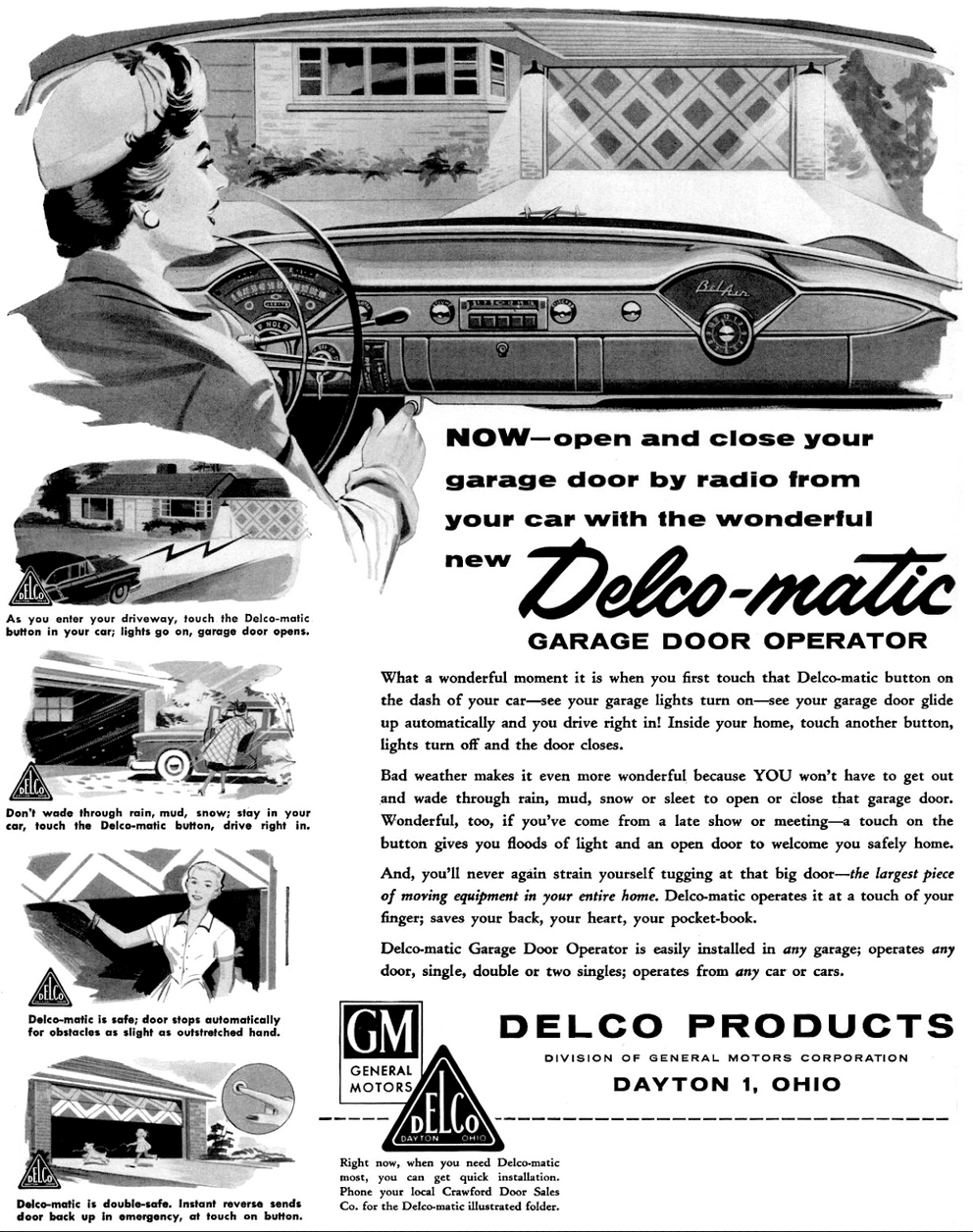
For decades, the driver or a passenger would have to get out of a car and open or close the garage door. In the 1920s, motorized garage door openers helped automate this process. A button located inside the garage activated the system. World War II stimulated the electronics industry's growth, which expanded into the consumer market after the war.
The Wayne-Dalton Story
The Wayne-Dalton company was an early and successful manufacturer of garage doors, based in Ohio. When the company first moved there, they were lucky to find workers from the local Amish community who were excellent tradesmen. They began producing well-crafted, wooden garage doors in large quantities.